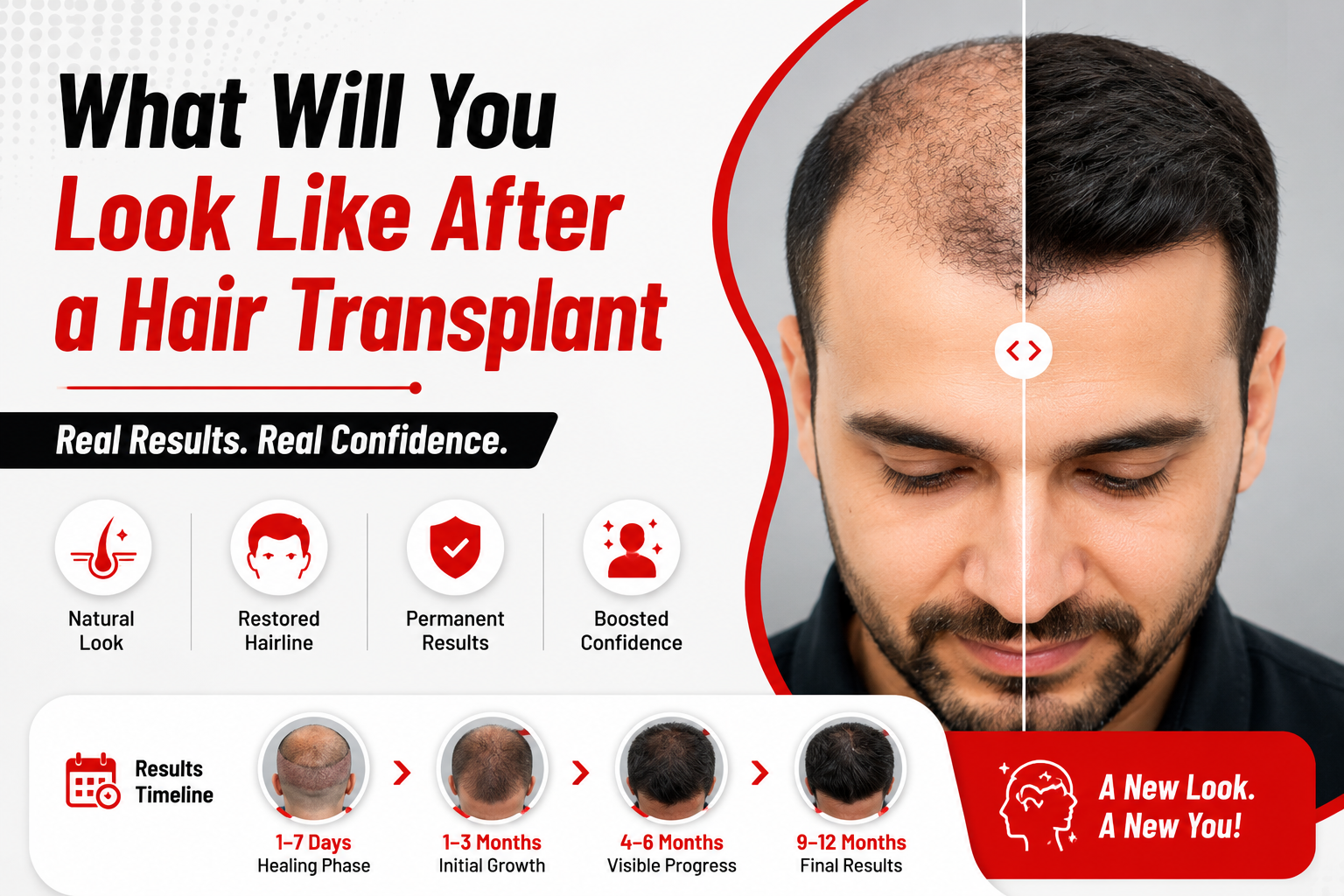
Hair transplantation has become one of the most effective solutions for restoring hair density and confidence. However, one question almost every patient asks before treatment is, “How will I look after a hair transplant?”
The answer depends on several factors, including your Norwood grade of hair loss, donor hair availability, scalp characteristics, and the technique used. This is where a modern hair transplant simulation, hair transplant result preview, and AI hair transplant tool in India can make a significant difference.
At Dr. Paul’s Advanced Hair & Skin Solutions, patients can now explore their potential results before surgery using a free AI-powered hair transplant simulation platform designed to provide a realistic visual preview of possible outcomes.
What Will You Look Like After a Hair Transplant? A Direct Answer
There is no single answer because every hair transplant result is unique. Outcomes depend on:
- Degree of hair loss (Norwood stage)
- Donor hair density
- Hair caliber and texture
- Hairline design
- Graft survival
- Surgical technique
- Long-term hair stabilization
A patient with early-stage hair loss may achieve higher cosmetic density than someone with advanced baldness requiring extensive graft coverage. While no simulation can guarantee exact results, an advanced hair transplant simulation helps patients visualize potential improvements and better understand what may be realistically achievable. This is why many patients are searching, ‘How will I look after a hair transplant? ” are increasingly turning to AI-powered preview technology before making treatment decisions.
Why Do Patients Want to See Results Before Surgery?
Hair transplantation is a long-term investment in appearance and confidence. Unlike a haircut that can be reversed within weeks, hair transplant results develop gradually over several months.
Many patients wonder:
- Will my new hairline look natural?
- How much density can I expect?
- Will I look younger?
- Can my bald areas be fully covered?
- How will my face change after treatment?
Traditional consultations often rely on verbal explanations, diagrams, and before-and-after photos. While helpful, they do not show how an individual patient may personally appear after treatment. This gap has created demand for advanced hair transplant result preview technology.
How the AI Simulation Works
One of the most exciting developments in hair restoration planning is the introduction of AI-powered simulation systems. At Dr. Paul’s, the process is simple and user-friendly.
Step 1: Upload Your Photograph
The patient uploads clear photographs showing:
- Front profile
- Side profiles
- Hairline
- Crown area
These images provide the foundation for analysis.
Step 2: AI Maps Your Existing Hair Pattern
The system evaluates the following:
- Current hairline position
- Balding pattern
- Hair density
- Facial proportions
- Hair loss severity
Advanced algorithms identify areas affected by thinning and estimate potential restoration zones.
Step 3: AI Creates a Personalized Hairline Design
The system then generates a realistic projected hairline based on the following:
- Facial structure
- Age
- Existing donor availability
- Hair restoration principles
This provides a customized hair transplant result preview rather than a generic template.
Step 4: Doctor Evaluation
Unlike fully automated systems, medical review remains essential. A qualified hair restoration specialist evaluates the following:
- Hair loss pattern
- Donor capacity
- Clinical feasibility
- Long-term planning
This step ensures that the simulation remains grounded in realistic surgical possibilities.
Step 5: Visual Preview
The final image allows patients to visualize potential outcomes and understand how improved density and hairline restoration may affect their overall appearance.
This process has helped position the platform among the most innovative AI hair transplant tool solutions in India currently available.
Why AI Simulation Is Changing Hair Transplant Consultations
Traditional consultations often leave patients uncertain about expected outcomes. AI simulations help by:
- Improving patient understanding
- Setting realistic expectations
- Supporting treatment planning
- Enhancing consultation quality
- Reducing uncertainty before surgery
Instead of imagining a future result, patients can review a visual representation tailored to their own face and hair loss pattern.
How Accurate Is an AI Simulation Compared to Real Surgical Results?
This is one of the most common questions patients ask. The short answer is “AI simulations are planning and visualization tools, not guarantees.” Several factors influence actual surgical outcomes:
- Donor Density – The amount of available donor hair limits how much coverage can be achieved.
- Graft Survival – Even advanced techniques depend on successful graft healing and growth.
- Hair Characteristics – Hair thickness, curl pattern, and color significantly affect visual density.
- Healing Response – Every patient heals differently.
- Future Hair Loss – Ongoing hair loss in untreated areas may alter appearance over time.
Therefore, while an AI-generated hair transplant simulation can provide a realistic projection, actual results may vary based on biological and clinical factors.
However, modern AI tools are increasingly capable of generating previews that closely approximate likely outcomes when interpreted alongside professional medical assessment.
Real Before-and-After Photos vs AI-Simulated Previews
Patients often ask whether simulations are better than viewing actual patient results. The truth is that both serve different purposes.
| Real Before & After Photos | AI Simulation Preview |
| Shows actual patient outcomes | Shows your own potential appearance |
| Demonstrates clinic expertise | Personalized to your face |
| Validates treatment quality | Helps visualize your result |
| Useful for understanding possibilities | Useful for planning expectations |
| Based on completed cases | Based on projected outcomes |
Real photographs remain important because they demonstrate actual clinical performance. AI simulations complement them by helping patients answer the question:
- “What will I look like after a hair transplant?”
- Together, they create a more informed consultation experience.
- Who Should Use an AI Hair Transplant Simulation?
- The technology may be particularly helpful for:
- Early Hair Loss Patients
- Individuals considering preventive restoration.
- Receding Hairline Cases
- Patients seeking frontal hairline correction.
- Crown Baldness Patients
- Individuals exploring density improvement options.
- Advanced Baldness Cases
- Patients are evaluating coverage possibilities.
- First-Time Hair Transplant Candidates
- Those who want greater clarity before committing to treatment.
Benefits of Using a Hair Transplant Result Preview
- Better Decision-Making – Patients can make more informed treatment choices.
- Realistic Expectations – Visual previews reduce misunderstandings.
- Personalized Consultation – Every preview is based on the patient’s own photographs.
- Increased Confidence – Many patients feel more comfortable proceeding after seeing projected results.
- Improved Treatment Planning – Hairline design discussions become more productive.
These advantages explain why demand for hair transplant result preview tools continues to grow.
Why Doctor Review Still Matters
AI technology is powerful, but it does not replace medical expertise. Hair restoration planning requires evaluation of the following: –
- Scalp health
- Donor reserve
- Hair caliber
- Hair loss progression
- Medical conditions
- Future treatment needs
A simulation should always be interpreted within the context of a professional consultation. The combination of AI visualization and specialist evaluation provides the most accurate treatment planning experience.
Try Dr. Paul’s Free AI Hair Transplant Simulation
Many patients spend months researching clinics, techniques, and costs before scheduling treatment.
A free AI simulation provides a faster and more personalized starting point. With Dr. Paul’s AI-powered system, you can do the following:-
- Upload your photographs
- Receive a personalized preview
- Understand potential hairline improvements
- Visualize possible density enhancement
- Prepare for a detailed consultation
Whether you are experiencing early thinning or advanced baldness, seeing a preview of your potential transformation can make the decision-making process significantly easier.
Try the free AI hair transplant simulation today at drpauls.ai and discover what your future hairline could look like before treatment.
The Future of Hair Restoration Planning
Artificial intelligence is transforming healthcare, and hair restoration is no exception. Modern AI hair transplant tool India platforms are helping patients
- Understand treatment possibilities
- Improve consultation experiences
- Set realistic expectations
- Visualize outcomes more effectively
As these technologies continue evolving, AI-powered planning tools are expected to become a standard part of the hair transplant journey.
Conclusion
If you have ever asked yourself, “What will I look like after a hair transplant?” you are not alone. It is one of the most common concerns among prospective patients. While actual results depend on donor density, hair characteristics, surgical technique, and individual healing, modern hair transplant simulation technology can provide valuable insights before treatment begins.
A personalized hair transplant result preview helps bridge the gap between imagination and reality, allowing patients to better understand their options and make informed decisions. Combined with professional medical evaluation, an advanced AI hair transplant tool in India offers a powerful way to visualize potential outcomes before surgery.
FAQ
-
Is the AI simulation free?
Yes. Dr. Paul’s offers a free AI-powered hair transplant simulation that allows patients to upload their photographs and receive a personalized visual preview of potential hair restoration outcomes before consultation.
-
How accurate is the AI simulation?
The simulation is designed to provide a realistic estimate based on your current hair loss pattern, facial structure, and projected hairline design. However, actual surgical outcomes may vary depending on donor density, graft survival, healing response, and long-term hair loss progression.
-
Does the AI simulation replace a doctor’s consultation?
No. The AI simulation is a planning and visualization tool. A professional consultation is still necessary to evaluate donor availability, scalp health, medical history, treatment suitability, and realistic expectations before any hair restoration procedure.