Hair loss is typically thought of as an issue that primarily affects men; however, many women experience noticeable hair loss, the appearance of parted lines, receding hairlines, and loss of density. The emotional burden of loss of hair is especially difficult for women since hair loss is usually tied to self-esteem and identity. As the awareness of advanced hair restoration increases, the demand for women’s hair transplants in Kolkata has also increased to restore hair growth and self-confidence.
At Dr. Paul’s Advanced Hair & Skin Solutions, the process of restoring female hair is achieved through a thorough assessment of scalp and hair, as well as individualized treatment planning and the most advanced techniques for transplantation specifically designed for women’s particular hair loss.
Understanding Female Hair Loss
In contrast to male-pattern baldness, female hair loss is often seen differently. Females typically experience thinning that is diffuse on the scalp, rather than complete patches of baldness. Hair can gradually thin and have less volume, which can lead to a decrease in volume and a greater visibility of the scalp.
Female hair loss can impact:
- The central splits
- Frontal hairline
- Crown area
- Temples
- Overall scalp density
Many women are reluctant to seek treatment due to the belief that hair loss is not permanent or treatable. But modern treatments for women suffering from hair loss in Kolkata offer a wide range of viable options, including treatments for medical conditions and hair transplants for those who are suitable.
Common Causes of Hair Loss in Women
Knowing the root of the issue is crucial prior to evaluating any hair-restoration procedure.
- Genetic Hair Loss – Female Pattern Hair Loss (FPHL) is one of the main causes of hair loss. The hereditary condition slowly decreases the density of hair over time.
- Hormonal Changes – The hormonal fluctuations can greatly affect the growth of hair. Common triggers for this include: –
- Pregnancy
- Childbirth
- Menopause
- Polycystic Ovary Syndrome (PCOS)
- Thyroid disorders
- Nutritional Deficiencies – Hair follicles require a healthy diet for proper functioning. Deficiencies in:-
- Iron
- Vitamin D
- Protein
- Zinc
- Vitamin B12
could be a factor in the excessive loss of hair and thinness.
- Stress and Lifestyle Factors – Stress, sleep deprivation, diets, crash eating, and unhealthy habits can cause short-term or long-term hair loss.
- Medical Conditions – Certain autoimmune disorders, hair loss, scalp conditions, and chronic diseases can affect the growth of hair.
- Hairstyles and Hair Damage – Repetitive chemical treatments, overheating, and hairstyles that are tight can cause hair follicles to weaken over time.
At Dr. Paul’s Advanced Hair & Skin Solutions, identifying the cause is a vital first step before recommending treatment.
Can Women Get Hair Transplants?
Yes. Women are often good candidates for hair transplantation in the event that they meet requirements for medical and scalp-related conditions.
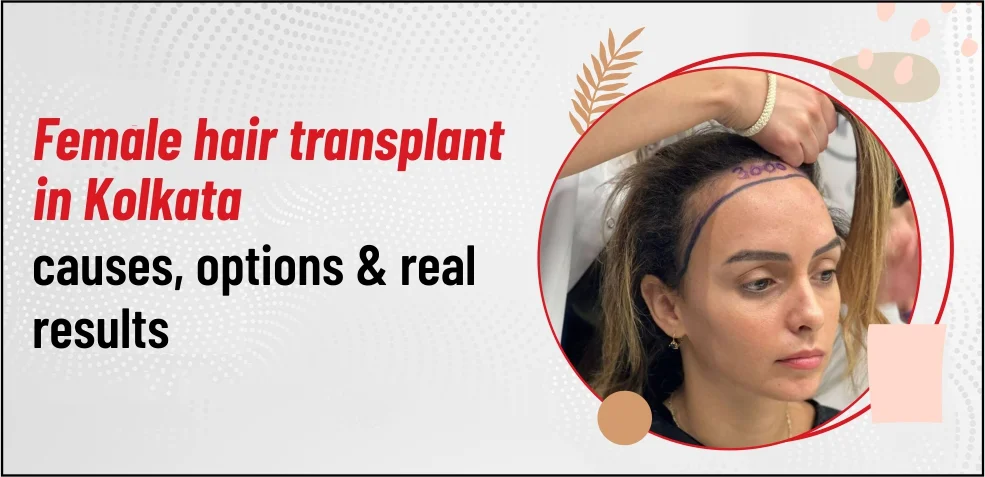
The female hair transplant procedure in Kolkata involves the relocation of healthy follicles that are in a donor area to areas that are experiencing loss of hair.
However, it is true that not all female hair loss types can be transplanted. An accurate evaluation is needed to determine the eligibility.
Who is a Good Candidate for a female hair transplant?
Women are good candidates if they are:
- Stable hair loss patterns
- Thinning in the local area
- Hairline receding
- Alopecia traction
- Hair loss due to scars
- Adequate donor hair density
- Realistic expectations
Women who have a lot of thinning may need alternative treatment options before considering surgery. This is the reason professional advice for hair transplants for women in Kolkata is crucial.
Female Hair Transplant vs Male Hair Transplant
Although the process is the same, the female hair restoration process needs a different approach to planning.
- Hairline Design – Female hairlines tend to be soft and more rounded.
- Donor Assessment – Women typically have different patterns of donor density in comparison to men.
- Thinning Patterns – Hair loss in women is typically thin, diffuse areas rather than areas of baldness.
- Cosmetic Considerations – Hair restoration must maintain an appearance that is natural while preserving the existing hair.
These elements require expert knowledge in the course of a male hair transplant in Kolkata procedure.
Types of Female Hair Transplant Procedures
FUE (Follicular Unit Extraction)
FUE is one of the most well-known techniques utilized in the present.
Benefits include:
- Scarring is minimal
- Speedier recovery
- Natural results
- Individual follicle extraction
Advanced FUE Protocols
Modern enhancements are focused on:
- Increased survival of grafts
- Better density
- Natural hairline creation
- Improved healing
Hairline Restoration
The ideal choice for women with frontal recession or temples that are thinned.
Scar Correction
Hair transplantation may also be able to regenerate hair growth in damaged areas of the scalp.
How Does a Female Hair Transplant Work?
The process typically involves several steps.
Consultation and Diagnosis
A comprehensive assessment evaluates:
- Hair loss causes
- Donor area quality
- Scalp health
- Medical background
- The suitability of treatment
Treatment Planning – The surgeon designs a specific restoration plan.
Follicle Extraction – Healthy follicles are taken from regions of donation.
Graft Preparation – Each graft is meticulously protected before implantation.
Implantation – Follicles are strategically placed to give natural density and create patterns of growth.
A well-planned approach is crucial when it comes to hair transplants for female Kolkata procedures since keeping existing hair in good condition is usually the main goal.
Areas Commonly Treated
- Frontal Hairline – For women who experience recession in the forehead area.
- Temple Restoration – Restore the balance and framing of the face.
- Widening Part Line – An issue that is common among women suffering from loss of hair patterns.
- Scarred Areas – Following surgeries, injuries, or burns.
- Eyebrow Restoration – In some instances, transplantation may also be utilized to improve eyebrows.
What Results Can Women Expect?
A common and frequently asked concern is the expected outcome.
- First Few Weeks – A temporary loss of transplanted hair is normal.
- Three to Four Months – The new growth of hair typically starts.
- Six to Eight Months – Improvements in the visible are evident.
- Twelve to Fifteen Months – The final results usually develop.
A successful transplantation procedure can bring the following:
- Denser
- Hairline appearance improved
- Better scalp coverage
- Improved confidence
- Long-term growth
The results are what result in female hair transplants in Kolkata being an increasingly sought-after option for those who are suitable.
Realistic Expectations Matter
Hair transplantation can improve appearance and density but does not increase hair volume to an unlimited extent. Considerations to be important include the following:
- Hair-loss restrictions for donors
- Existing hair quality
- Ongoing hair loss progression
- Individual healing patterns
Professional consultations help to set realistic goals before treatment starts.
Women’s Hair Loss Treatment Kolkata: Non-Surgical Options
Hair loss is not the same for every woman. Loss will require a transplant. A variety of non-surgical options could be recommended based on the diagnosis.
- Medical Therapy – Certain medications can help to stabilize hair loss and aid in growth.
- PRP Therapy – The treatment for Platelet-Rich Plasma uses growth factors that are derived from the patient’s own blood.
The potential benefits are:
- Reduction in shedding
- Healthier scalp
- Follicle stimulation
- Nutritional Correction – The correction of deficiencies can often promote healthy hair growth.
- Scalp Treatments – Controlling scalp problems can help improve the overall health of follicles.
Hair Growth Therapies
Individualized treatment plans could mix different methods. Many women start with hair loss treatment for women in Kolkata alternatives before deciding on transplantation.
Recovery After Female Hair Transplant
Recovery can be managed.
First Week
Patients might suffer from:
- Mild swelling
- Minor redness
- Small scabs
Two Weeks
The first visible symptoms of treatment start to disappear.
One Month
The possibility of temporary shedding can occur.
Three to Four Months
New growth begins to emerge.
Six to Twelve Months
Improvements continue to be made in a progressive manner. The proper aftercare is a key factor in positive outcomes.
Factors Affecting Female Hair Transplant Success
Many factors influence the results.
- Donor Hair Quality
- Healthy donor follicles boost the density of the follicles.
- Surgical Expertise
- Precise placement affects natural appearance.
- Graft Survival
- Proper preservation techniques support better outcomes.
- Scalp Health
- Healthy scalp conditions aid in the best healing.
- Long-Term Hair Management
- Supporting existing hair remains important after transplantation.
Female Hair Transplant Cost in Kolkata
Treatment costs vary depending on:
- The number of grafts needed
- Gradual loss of hair
- Treatment technique
- Complexity of the area around the donor
- Expertise in the clinic
Because each patient has their own specific needs, an individual evaluation is required to ensure an accurate price.
Why Are More Women Choosing Hair Transplants?
The awareness of hair loss in women has increased dramatically in the last few years.
Women are becoming more aware of:
- Hair loss can be treated
- Modern techniques provide results that are natural.
- Recovery is manageable
- Long-term outcomes can be extremely satisfying
This increased awareness has led to a greater interest in hair transplants specifically for females. Kolkata methods.
Why Choose Dr. Paul’s Advanced Hair & Skin Solutions?
Restoring hair in women successfully is more than just transplanting hair follicles. At Dr. Paul’s Advanced Hair & Skin Solutions, the treatment plan focuses on the following:
- Complete analysis
- Analyzing the scale
- Plans for customizing restoration
- Modern transplantation techniques
- Long-term hair stabilization
- Natural-looking results
The clinic focuses on individualized care, as female hair loss usually needs a more specific treatment than men’s hair restoration.
Conclusion
Hair loss among women is more frequent than people realize, and the emotional effects can be devastating. However, advancements in hair restoration have provided viable solutions for people who meet the criteria. The cause could be genetic hormone changes, medical issues, or even scalp trauma. The latest treatments for women’s hair loss in Kolkata can solve a variety of issues.
For women who are considering the women’s hair transplant Kolkata procedure, knowing the reasons behind hair loss treatments, the recovery process, and expected results is crucial. Although not all women require surgery, those who have been carefully chosen are able to see significant improvement in appearance, density, and confidence with hair transplants for women in Kolkata.
With a proper diagnosis, customized plan, and long-term management, female hair transplantation is able to deliver natural-looking, long-lasting results that will restore hair and confidence in oneself.
FAQ
-
Is a female hair transplant permanent?
Yes, transplanted hair follicles are generally long-lasting and grow naturally.
-
Do women who have hair loss have hair transplants?
Certain women are able, but the ability to do so depends on the availability of donors and the pattern of hair loss.
-
Are the results natural-looking?
If properly done, the transplanted hair will blend naturally with the existing hair.
-
How long is the recovery time?
The majority of patients return to routine activities in a short time, although complete results can take a couple of months to show.
-
Is a hair transplant painful?
The procedure is generally done under local anesthesia to minimize discomfort.