RF Microneedling: Benefits, Results & What to Expect

What Is RF Microneedling?

RF Microneedling (Radiofrequency Microneedling) is a minimally invasive skin rejuvenation treatment that combines:

  • Microneedling (controlled micro-injuries to stimulate healing)
  • Radiofrequency energy (thermal stimulation in deeper dermal layers)

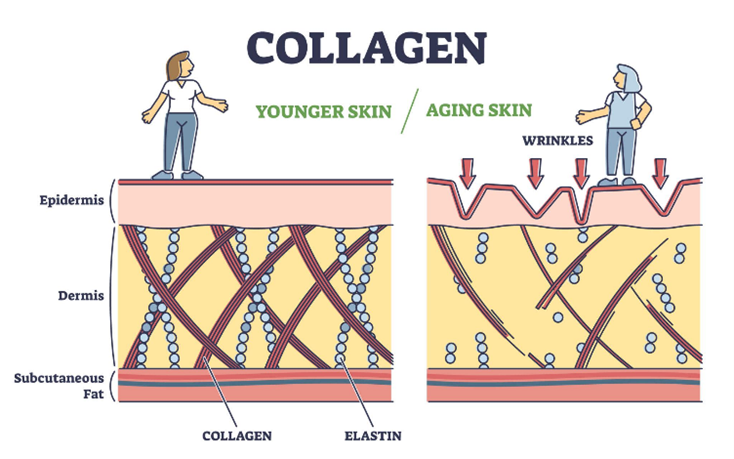
Together, they trigger powerful collagen and elastin production, leading to firmer, smoother, and more youthful-looking skin.

Unlike traditional Microneedling, RF technology delivers heat energy deeper into the dermis, making it significantly more effective for tightening and scar remodeling.

How Does RF Microneedling Work?

The procedure works in three biological stages:

1️. Controlled Micro-Injury

Fine insulated needles create tiny channels in the skin, activating the natural wound-healing process.

2️. Targeted RF Energy Delivery

Radiofrequency energy penetrates deeper layers, causing controlled thermal stimulation.

3️. Collagen Remodeling Phase

Over the next 6–12 weeks, the skin produces new collagen and elastin, improving:

  • Skin firmness
  • Texture
  • Acne scars
  • Pore size
  • Fine lines

This is why results appear gradual and natural.

What Skin Concerns Can RF Microneedling Treat?

RF Microneedling is highly versatile and effective for:

✔ Acne scars
✔ Enlarged pores
✔ Fine lines and wrinkles
✔ Mild to moderate skin laxity
✔ Uneven skin texture
✔ Stretch marks (in selected cases)
✔ Neck and jawline tightening

It is especially beneficial for Indian skin types where certain laser treatments may carry pigmentation risks.

RF Microneedling vs Traditional Microneedling

Feature Traditional Microneedling RF Microneedling
Depth of stimulation Superficial dermis Deeper dermis
Collagen induction Moderate High
Skin tightening Minimal Significant
Acne scar correction Good Superior
Downtime 2–3 days 2–4 days

RF technology enhances collagen stimulation for stronger lifting and remodelling effects.

What to Expect During the Procedure?

At Dr Paul’s Advanced Hair & Skin Solutions, we follow a structured protocol:

  1. Skin assessment and diagnosis
  2. Topical anesthetic application
  3. Depth-customized RF microneedling session
  4. Post-treatment calming and protection

The procedure typically takes 45–60 minutes.

Most patients experience mild redness and swelling for 24–72 hours.

How Many Sessions Are Required?

For optimal results:

  • Acne scars: 3–4 sessions
  • Skin tightening: 3 sessions
  • Maintenance: Once every 6–12 months

Sessions are usually spaced 4–6 weeks apart.

Collagen remodelling continues for up to 3 months after each session.

Is RF Microneedling Safe?

When performed by trained medical professionals using approved devices, RF microneedling has a strong safety profile.

Possible temporary effects include:

  • Redness
  • Mild swelling
  • Slight tenderness

Proper parameter customization reduces risk of complications.

At Dr Paul’s, every treatment is:

✔ Skin-type calibrated
✔ Depth-adjusted
✔ Medically supervised
✔ Protocol-driven

Frequently Asked Questions 

Is RF microneedling painful?

A topical anesthetic is applied before the procedure, making it tolerable for most patients.

How soon will I see results?

Initial glow appears within a week. Tightening and scar improvement develop gradually over 4–12 weeks.

Is RF microneedling better than laser?

It depends on the concern. RF microneedling is safer for darker skin types and excellent for texture and tightening.

Can RF microneedling remove acne scars permanently?

It significantly improves acne scars by stimulating collagen. Severe scars may require combination therapies.

Who Is an Ideal Candidate?

You may benefit if you:

  • Have acne scars
  • Notice early sagging
  • Want tighter skin without surgery
  • Prefer minimal downtime
  • Seek natural-looking rejuvenation

A proper consultation determines candidacy.

The Dr Paul’s Regenerative Approach

At Dr Paul’s Advanced Hair & Skin Solutions, RF microneedling is often combined with:

✔ PRP (Platelet Rich Plasma)
✔ Exosome therapy
✔ Medical-grade cosmeceuticals
✔ Skin longevity protocols

Because collagen stimulation works best when supported biologically.

We don’t treat symptoms.

We remodel structure.

Why Choose Dr Paul’s for RF Microneedling in Kolkata & Assam?

  • Advanced medical-grade RF technology
    • Personalized depth calibration
    • Experienced aesthetic physicians
    • Safety-first protocols
    • Long-term collagen planning

Available at:

  • Salt Lake, Kolkata
  • Rash Behari, Kolkata
  • Guwahati
  • Jorhat

Book Your RF Microneedling Consultation

If you’re considering skin tightening or acne scar correction, a structured evaluation is the first step.

📍 Visit Dr Paul’s Advanced Hair & Skin Solutions
📞 Schedule your consultation today

Dr Paul’s Advanced Hair & Skin Solutions
Your Confidence Partner.
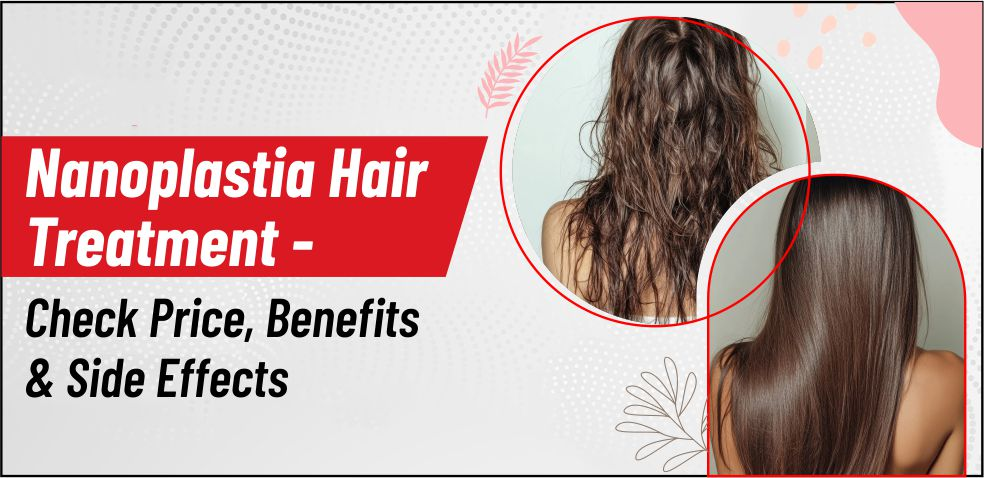


Nanoplastia Hair Treatment: Check Price, Benefits, and Side Effects

Frizz, dryness, breakage, unmanageable curls, or lifeless locks that refuse to shine. Millions of people across the world struggle with one or more of these hair concerns every day. The general quest for smoother, healthier, and more manageable hair has led to the emergence of several advanced hair treatments.

One such treatment stealing the limelight these days is nanoplastia. As a gentler and more advanced alternative to traditional keratin smoothing, nanoplastia is becoming increasingly popular among hair enthusiasts.

Are you considering nanoplastia but are unsure of its safety, benefits, cost, and side effects? Dr Paul’s detailed guide will help you have a deeper understanding of the procedure.

What is Nanoplastia Hair Treatment?

Nanoplastia focuses on deep hair reconstruction and smoothing. It uses nano-sized molecules that penetrate your hair shaft and restore the damaged fibers.

The term “nano” refers to the extremely small particle size of the active ingredients used in the treatment. Due to their size, these particles can enter the inner layers of your hair to restore strength and elasticity.

Unlike traditional straightening or smoothing treatments, nanoplastia does not use heavy chemicals like formaldehyde or formaldehyde releasers. Instead, it focuses on repairing your hair from within. This makes it stronger, smoother, and more manageable.

In simple terms, nanoplastia aims to improve your hair quality. The smoothness follows naturally.

How Does Nanoplastia Treatment Work?

To understand nanoplastia, you need to understand the basic structure of your hair. Each hair strand is made up of an outer layer called the cuticle and an inner core called the cortex. While the cuticle acts as a protective layer, the cortex is responsible for the strength and elasticity of the strand.

Most hair treatments focus on the cuticle. Nanoplastia, however, works deeper, as explained in the following sections.

Step 1: Penetration

The initial stage of the treatment is focused on delivering nano-sized amino acids, proteins, and conditioning agents to your hair strands. These active particles penetrate the cortex of each hair strand to work on its strength and elasticity.

Step 2: Fiber Reconstruction

The active ingredients help rebuild broken protein bonds, replenish moisture, and improve elasticity in the strands. This stage involves an attempt at managing and reversing the hair damage caused by pollution, heat styling, coloring, and chemical processes.

Stage 3: Cuticle Alignment

This step uses heat to smoothly seal the cuticle over the repaired cortex. It helps reduce frizz and imparts a shine to your hair.

Nanoplastia treatment takes a few hours, but it focuses on the deep reconstruction of your hair. Due to this, it often delivers lasting results. Depending on the hair type and maintenance, the results could last for up to 3 to 6 months.

Benefits of Nanoplastia Hair Treatment

Nanoplastia might be the hype these days, but it is for a reason. The treatment offers a range of benefits, from aesthetic value to long-term hair health. The following sections discuss some of the most remarkable benefits of nanoplastia hair treatment.

1. Visible Improvement in Hair Texture

After the treatment, your hair becomes smoother, softer, and more manageable while also appearing natural.

2. Long-Term Hair Repair

Unlike cosmetic treatments, nanoplastia strengthens your hair strands internally. This improves their resilience and elasticity, which lasts for a long time.

3. Reduced Frizz

The final step of nanoplastia focuses on aligning the cuticle over the treated cortex layer. This allows your hair to stay smooth and controlled even in humid weather.

4. Enhanced Shine and Smoothness

With a smooth and nourished cuticle, the light reflects better. This gives your hair a naturally healthier appearance.

5. Less Damage from Daily Styling

With your hair being smoother and more manageable, you do not have to rely on heat styling tools to make your hair look presentable. This allows the hair strands some downtime to heal.

6. Color-Safe Formulation

Nanoplastia does not strip hair color and may even help preserve it.

Potential Side Effects of Nanoplastia

Nanoplastia is generally considered a safe and mild procedure. However, as with any treatment, it carries the risk of some potential side effects.

Mild/Temporary Side Effects

  • Mild scalp sensitivity
  • Slight dryness if hair was already damaged
  • Temporary irritation from heat styling

Rare Side Effects

  • Allergic reaction to product ingredients
  • Scalp redness or itching

Make sure you do a patch test before the treatment, especially if you have a sensitive scalp.

Nanoplastia Hair Treatment Price in India

The cost for nanoplastia hair treatment in India varies based on several factors. Some of them include:

  • The length and thickness of your hair
  • Product brand used
  • The expertise of the clinic
  • City and location

The average price range is as follows:

  • Estimated cost for short hair: 3,000 INR to 5,000 INR
  • Estimated cost for medium-length hair: 5,000 INR to 8,000 INR
  • Estimated cost for long hair: 8,000 INR to 12,000 INR or more

Kindly note that this is simply an estimated average value. The overall cost of the treatment may vary between different clinics and locations.

Who is an Ideal Candidate for Nanoplastia?

Nanoplastia might be the best solution if you are dealing with:

  • Frizzy or unmanageable hair
  • Dry, rough texture
  • Heat or color damage
  • Mild to moderate curl loosening needs
  • Hair that lacks shine and softness

This treatment is the most suitable for:

  • Straight, wavy, and mildly curly hair
  • Color-treated hair
  • Chemically untreated
  • Previously treated hair after assessment

Nanoplastia treatment might not be ideal for you in the following cases:

  • Severely damaged or broken hair
  • Active scalp infections or wounds
  • Recently bleached or chemically relaxed hair
  • Pregnant or breastfeeding women must consult with a specialist first

Get Both Aesthetics and Healing with Nanoplastia

Nanoplastia hair treatment is a repair-focused hair care rather than aggressive cosmetic smoothing. It offers a modern solution if you are looking to restore your hair health while also achieving smoother, shinier, more manageable hair.

As with any professional treatment, the success of this procedure depends on the correct diagnosis, the use of quality products, and expert application. It is best to consult with a qualified and experienced specialist to ensure the treatment is tailored to the specific needs of your hair.

Consult with our experts at Dr. Paul’s Advanced Hair and Skin Solutions Clinic to get the best professional care for a nanoplasty treatment.

FAQs

  1. How long does nanoplasty hair last?

The effects of nanoplasty typically last between 4 to 6 months. It depends greatly on your hair type, the quality of the products used, and your post-treatment hair care routine. In some cases, this treatment may last for up to 8 months.

  1. Which is better, Nanoplastia or keratin?

Nanoplastia is generally considered a better alternative than keratin hair treatment. While keratin is classic and highly effective in straightening thick hair, it is heavily chemical-based. Nanoplastia, on the other hand, is formaldehyde-free, deeply nourishing, versatile, and longer lasting.

  1. What to avoid after nanoplastia?

After nanoplastia treatment, it is recommended to avoid heat styling. Use mild shampoo instead of the heavily chemical-based ones. It is best to refrain from very tight hairstyles to prevent putting any strain on your hair.

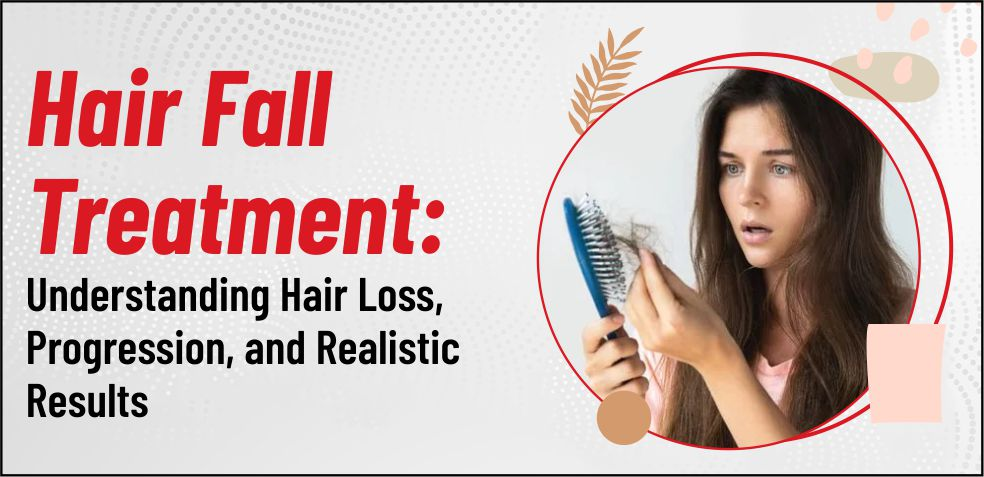
Hair Fall Treatment: Understanding Hair Loss, Progression, and Realistic Results

Hair fall is not a single problem. Treating it like one is why most treatments fail. Hair fall is often discussed casually: oil more, stress less, take supplements, and wait six months. But people who sit in front of a mirror every morning and see more scalp than yesterday know this is not casual. Hair fall is controlled by biology, timing, and decisions taken early or delayed too long.

At Dr. Paul’s Advanced Hair & Skin Solutions, hair fall treatment is approached with one basic understanding: that is, hair does not fall randomly, and it does not recover randomly either.

This blog is not about quick fixes. It explains how hair loss actually progresses, why many treatments do not work, and how medical hair care should be planned.

Hair Fall Is a Process, Not an Event

Most patients come saying, “My hair is suddenly falling.” But, in reality, hair fall starts months before it becomes visible. The hair cycle works in phases:

  • Growth phase
  • Resting phase
  • Shedding phase

When something disturbs this cycle, such as hormonal change, nutritional gap, inflammation, or genetic sensitivity, the hair enters shedding mode earlier than it should. What you see today actually started weeks or months back. This is why waiting and watching rarely helps.

Why Hair Oils, Shampoos, and Serums Have Limits

External products can improve scalp comfort, hair texture, and breakage control. But they cannot correct internal triggers like:

  • Hormonal sensitivity
  • Follicle miniaturisation
  • Chronic inflammation
  • Nutrient absorption issues

This is not a criticism of products. It is a reality of hair biology. Hair loss treatment must address what is happening below the skin, not only on it.

Hair Fall Is Not the Same for Everyone

Treating all hair fall with the same protocol is a mistake. At Dr. Paul’s Advanced Hair & Skin Solutions, hair loss is broadly evaluated into patterns such as:

  • Pattern thinning (front, crown, part widening)
  • Diffuse shedding across the scalp
  • Patchy or sudden loss
  • Hair fall after illness, stress, or weight change
  • Hair thinning despite “normal” blood tests

Each pattern behaves differently; some are reversible, some are controllable, and some are progressive by nature. Using the same protocol for all of them creates false hope and wasted time.

Correct identification of the pattern decides whether the goal is recovery, preservation, or long-term control.

Why Do Many Hair Loss Treatments Stop Working After Some Time

This is a common frustration. Patients say:

  • “Initially, it helped; then hair fall started again.”
  • “It reduced for a few months and is now back to the same.”

This happens when:

  • Treatment is started too late
  • Follicles are already weakened beyond recovery
  • Only shedding is controlled, not the root cause
  • Follow-up adjustments are not done

Hair follicles are living structures. They respond, adapt, weaken, or recover depending on conditions. Treatment cannot remain static while biology keeps changing. Hair fall management requires review, modification, and timing, not blind continuation.

How Hair Fall Is Evaluated at Dr. Paul’s Advanced Hair & Skin Solutions

Before starting any treatment, clarity is established. Evaluation includes:

  • Pattern and duration of hair loss
  • Family history and progression speed
  • Scalp condition and sensitivity
  • Hair shaft thickness and density
  • Past treatments and responses
  • Lifestyle factors affecting recovery

This assessment answers an important question: Is the hair likely to recover, stabilise, or only slow down further loss? Not every patient needs aggressive treatment. Not every patient can afford to wait either.

Treatment Options Used, Based on Need, Not Trend

  1. Medical Management (Foundation Step)

For many patients, hair fall can be stabilised with:

  • Prescription-based topical solutions
  • Oral support when required
  • Scalp-calming treatments

These are not cosmetic recommendations. They are medical decisions, reviewed and adjusted based on response. The aim at this stage is control, not dramatic regrowth.

  1. PRP Therapy (When Follicles Are Weak, Not Dead)

PRP works best when:

  • Hair thinning is early to moderate
  • Follicles are present but sluggish
  • Shedding is persistent despite medication

PRP does not create new follicles. It helps existing ones function better. Over-promising results here leads to disappointment. At Dr. Paul’s Advanced Hair & Skin Solutions, PRP is advised selectively, not routinely.

  1. Mesotherapy (Targeted Scalp Nutrition)

Mesotherapy delivers nutrients directly to the scalp, where absorption is otherwise poor. It is useful when:

  • Hair fall is diffuse
  • Oral supplements are not tolerated
  • Scalp health is compromised

It supports the scalp environment. It does not replace medical treatment. Used correctly, it complements the plan rather than becoming the plan.

  1. Advanced Planning for Progressive Hair Loss

Some hair loss patterns are progressive by nature. In such cases, treatment focuses on:

  • Slowing loss
  • Preserving density
  • Planning long-term strategy

Honest guidance is given early so expectations remain realistic.

What Hair Fall Treatment Cannot Do

This is rarely discussed openly. Hair fall treatment cannot:

  • Restore hair in completely bald areas
  • Reverse years of untreated genetic loss
  • Work without consistency and follow-up
  • Replace follicles that no longer exist

Clear boundaries protect patients from false hope and unnecessary expense.

Hair Fall and Mental Stress: A Two-Way Link

Hair fall increases stress. Stress worsens hair fall. But treating stress alone does not reverse hair loss. Medical intervention breaks this cycle by stabilising shedding first. Once hair fall reduces, mental stress naturally improves. Ignoring hair fall and focusing only on “stress management” delays recovery.

Recovery Timeline: What Is Reasonable?

Hair responds slowly. This is biological, not optional. General expectations:

  • 4–6 weeks: reduction in excessive shedding
  • 3–4 months: visible improvement in thickness or density
  • 6 months and beyond: stabilisation and maintenance

Anyone promising visible regrowth in 30 days is not being honest.

Why Hair Fall in Women is Often Missed

Women often have:

  • Diffuse thinning instead of bald patches
  • Normal-looking scalp initially
  • Hair fall mistaken for seasonal or temporary

Because shedding may not look dramatic, hair fall is often dismissed as temporary. By the time thinning becomes obvious, density is already compromised. Early evaluation matters more than aggressive treatment later.

Why Patients Choose Dr. Paul’s Advanced Hair & Skin Solutions for Hair Fall Treatment

Patients choose Dr. Paul’s Advanced Hair & Skin Solutions because:

  • Hair loss is assessed, not assumed
  • Treatment plans are customised
  • Unrealistic promises are avoided
  • Follow-ups are adjusted logically
  • Focus is on preservation, not panic

Hair is treated as a long-term health concern, not a cosmetic emergency.

Conclusion

Hair fall is not solved by hope, oils, or shortcuts. It is managed by understanding timing, biology, and limits.

If you are considering hair fall treatment, the most important step is not speed but clarity. Knowing why your hair is falling, what stage it is in, and what can realistically be controlled makes all the difference. Hair that is assessed early can often be stabilised and preserved for years. Hair that is ignored, delayed, or treated casually usually reaches a point where options become limited.

Hair fall management is not about chasing quick results. It is about making the right decisions before the damage becomes permanent.

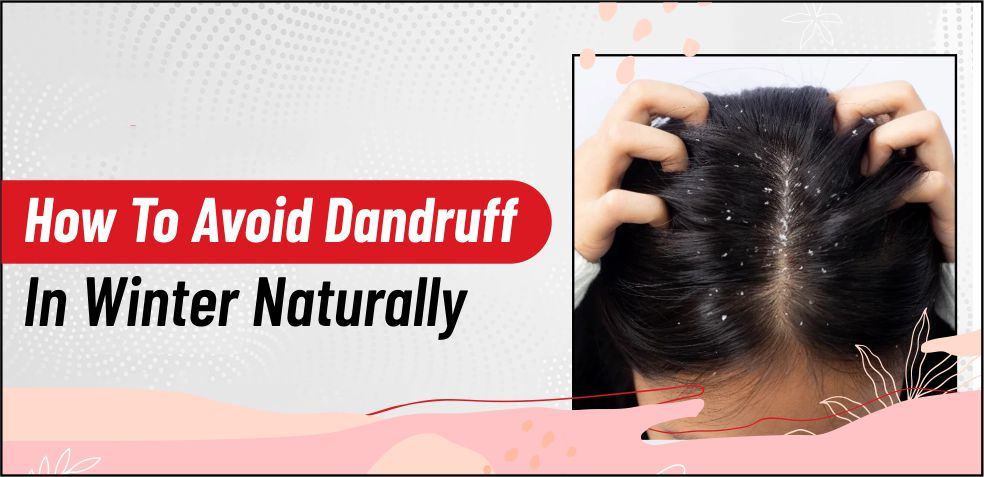
How to Avoid Dandruff in Winter Naturally: A Dermatologist’s Guide

Winter is the season of blankets, hot chocolates, and basking in the sun. For many people, however, it is also the season of unmanageable dandruff.

Dandruff means a flaky scalp, persistent itchiness, dryness, and visible white flakes on clothes. This can significantly affect your confidence and comfort. While dandruff is not a serious medical condition, it can become chronic, recurrent, and stubborn, especially during the colder months.

The good news is that you can naturally prevent and control dandruff in winter. You simply need a better understanding of its causes and to follow our expert’s tips on avoiding dandruff in winter naturally. For more, consult one of the best hair transplant clinics in Kolkata.

Understanding Dandruff: What Happens in Your Scalp?

Your scalp naturally sheds skin. So a slight flakiness is natural. However, dandruff is a condition brought on by the faster and excessive shedding of the skin cells in your scalp. This is why the flakiness becomes noticeable and often unmanageable.

Contrary to popular belief, dandruff is not always caused by dryness alone. It is often the result of an imbalance in your scalp health. In most cases, dandruff is associated with one or more of the following:

  • Mild inflammation of the scalp
  • An imbalance in the natural scalp oils
  • Overgrowth of Malassezia, a yeast that normally lives on the scalp

In most cases, taking proper care of your scalp and catering to its health can help you get rid of dandruff. The following sections discuss in detail how you can do that.

Why Does Dandruff Worsen in Winter?

Winter brings about numerous environmental changes, many of which can exacerbate your dandruff. The most contributing factors are discussed below.

  1. Loss of Moisture from the Scalp

While scalp dryness is not the sole cause of dandruff, it is a significant contributor. The cold air outdoors and the dry, heated air indoors in winter can reduce the natural moisture in your skin. Similarly, your scalp loses hydration easily during winter, which weakens its protective barrier. This can lead to flaking and irritation.

  1. Hot Showers

Long, hot showers feel heavenly during winter. However, it can strip away the natural oils from your skin and scalp, leaving it dehydrated and prone to dandruff.

  1. Reduced Sun Exposure

Sunlight has mild anti-inflammatory and antifungal effects. Reduced sun exposure during winter can allow the dandruff-causing organisms on your scalp to thrive.

  1. Use of Wool Caps and Scarves

Caps, woollen hats, scarves, and other tight headwear trap heat and sweat while also limiting airflow to your scalp. This combination favors fungal overgrowth and scalp irritation.

  1. Seasonal Allergies

Many individuals experience seasonal allergies or get sick as the seasons change. This can temporarily weaken your immune system, affecting your scalp’s ability to regulate inflammation and microbes.

How to Avoid Dandruff Naturally?

Mild to moderate cases of dandruff can often be effectively addressed using natural methods. It does not include aggressive home remedies, which can further irritate your scalp. Instead, it involves small, gentle steps that aim at reducing inflammation and preserving your scalp barrier. The sections below discuss some tips from experts on avoiding dandruff naturally.

1. Use Lukewarm Water for Washing Hair

Always wash your hair with lukewarm water to prevent stripping away the natural oils from your scalp. Finish the wash with a cool rinse to help seal the scalp barrier.

2. Maintain a Consistent Hair Wash Routine

Everyone is guilty of skipping hair washes in winter. But doing so allows dead skin cells, oil, and microorganisms to accumulate, which can cause or worsen dandruff. Having a consistent hair wash routine can help you keep a clean scalp, which heals better and flakes less.

You can follow the tips below to get the best results:

  •  Wash your hair at least twice a week
  • Focus on cleansing the scalp, not just your hair
  • Rinse thoroughly with water to avoid residue buildup

3. Use a Non-Irritating, Sulfate-Free Shampoo

Harsh shampoos can disrupt the natural pH and microbiome of your scalp. Using a mild, sulphate-free cleanser helps maintain your scalp’s balance without overdrying your hair.

Look for the following formulations in your shampoo:

  • Aloe vera
  • Tea-tree oil in low concentrations
  • Zinc-based or botanical soothing agents

Avoid shampoos with heavy fragrance or alcohol.

4. Oil Your Scalp the Right Way

Oiling is an essential part of traditional hair care. However, doing it wrong can feed the fungal growth and worsen the dandruff. Avoid overnight oiling, applying thick layers of oil, and not washing it off properly.

Use the following tips to oil your hair the right way:

  • Use light oils like jojoba, coconut, or almond oil
  • Gently massage the scalp with your fingertips
  • Leave the oil on for thirty to sixty minutes
  • Add two to three drops of tea tree oil to the oil you apply to your hair and scalp

5. Avoid Scratching Your Scalp

Scratching your scalp may provide temporary relief from the itchiness. However, it damages your scalp barrier and worsens inflammation.

Here’s what you can do:

  • Avoid scratching; gently massage with your fingertips instead
  • Use a soft-bristle brush
  • Treat itchiness with a soothing agent; consult with a doctor if needed

6. Cold Protection Without Suffocating Your Scalp

Covering your head can be a necessity during winter. However, frequent use of tight and rough materials can irritate your scalp.

Try the following to shield your scalp:

  • Cotton-lined headwear
  • Loose-fitting scarves or caps
  • Avoid putting tight wool directly on the scalp
  • Avoid wearing the same cap daily without washing it

7. Maintain Scalp Hydration

Just like your facial skin, your scalp needs hydration in winter.

Follow these tips to maintain scalp hydration:

  • Avoid excessive shampooing
  • Apply lightweight scalp serums or aloe-based gels
  • Apply conditioner only to the hair lengths, not the scalp

8. Maintain Indoor Humidity

Heaters and air conditioners dry the indoor air significantly. Using a humidifier helps maintain proper moisture levels, which benefits both skin and scalp. Even placing bowls of water near heat sources can make a difference.

9. Follow a Proper Diet

Your nutritional intake can directly impact your scalp health.

Include the following components in your diet:

  • Drink plenty of water
  • Omega-3 fatty acids, found in nuts, seeds, and fish
  • Zinc, found in pumpkin seeds and legumes
  • Vitamin B complex
  • Antioxidants from fresh fruits and vegetables

10. Manage Your Stress Levels

Stress directly triggers an inflammatory response in your body. Chronic stress can, therefore, worsen scalp inflammation and delay scalp healing.

You can follow these stress-management techniques:

  • Regular sleep schedule
  • Breathing exercises
  • Gentle physical activity
  • Mindfulness practices

Consult With a Dermatologist to Manage Dandruff

You learnt about the natural ways to avoid and manage dandruff in winter. Using these simple tips and making the necessary adjustments to your lifestyle can help you lead a dandruff-free winter.

However, in cases of severe dandruff, consulting an experienced dermatologist can help you resolve the issue effectively. Even in mild to moderate cases, an expert can suggest the best personalized ways to deal with dandruff.

At Dr. Paul’s Clinic, we offer consultation and treatment for effective dandruff management. Our experts are seasoned to provide the best scalp care based on your personalized needs.

FAQs

  1. How to avoid dandruff during winter?

To avoid and manage dandruff during winter, maintain scalp hydration and cleanliness. Oil your hair at least once a week for thirty to sixty minutes before washing it off. Avoid oil and debris buildup on your scalp, and refrain from wearing tight headwear.

  1. Which oil is best for dandruff in winter?

Light oils like jojoba, coconut, and almond oil are best for winter. Add a few drops of tea tree oil to your regular oil to prevent and manage dandruff. Tea tree oil has antifungal and antibacterial properties, which address dandruff effectively.

  1. How often should I wash my hair if I have dandruff?

If you have dandruff, washing your hair three times a week can prove effective. It prevents oil and debris buildup, which can exacerbate your dandruff. However, take care to maintain proper hydration in your scalp.

Why Most Hair Treatments Fail — And What Most People Get Wrong

Hair loss is one of the most common concerns we see at Dr Paul’s Advanced Hair & Skin Solutions.
And yet, one pattern repeats itself again and again.

Many people come to us after trying:

  • Oils
  • Shampoos
  • Supplements
  • Home remedies
  • Even PRP sessions

But they say the same thing:

“Nothing really worked.”

Here’s the truth.

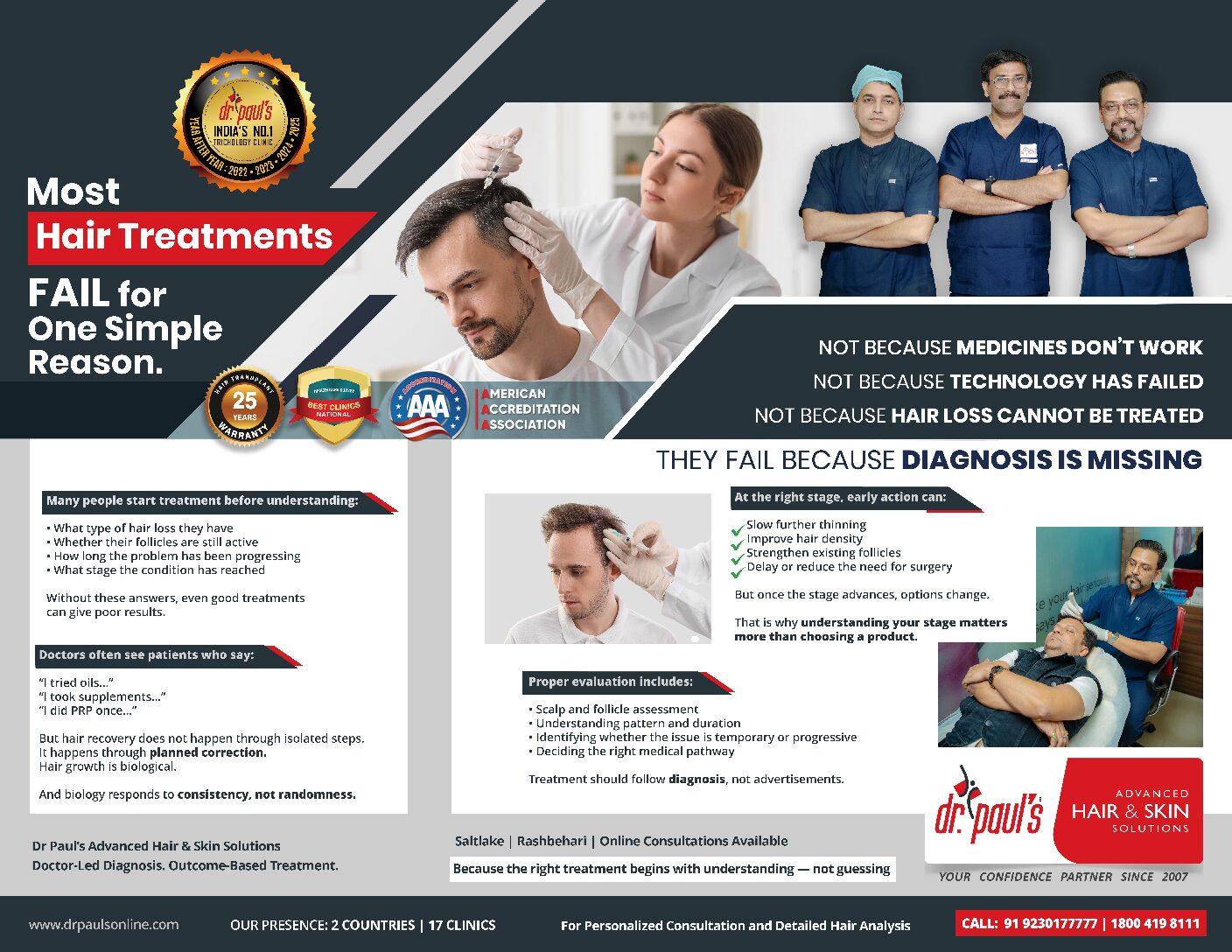
Most hair treatments don’t fail because medicine doesn’t work. They fail because the problem was never properly diagnosed.

Hair Treatment Without Diagnosis Is Guesswork

Hair loss is not a single condition.
It can happen for many different reasons, including:

  • Genetic pattern hair loss
  • Stress-related shedding
  • Hormonal changes
  • Nutritional deficiencies
  • Illness or post-infection recovery
  • Scalp conditions

Each of these requires a different medical approach.

But many people start treatment based on:

  • Internet advice
  • Product advertisements
  • Someone else’s experience
  • Pharmacy recommendations

Without understanding what type of hair loss they actually have, treatment becomes random — and random treatment leads to random results.

Hair Fall and Hair Loss Are Not the Same

One of the biggest misunderstandings we see is this:

People think ‘hair fall’ and ‘hair loss’ mean the same thing.

They don’t.

Hair fall often refers to temporary shedding. Follicles may still be healthy and capable of recovery with the right support.

Hair loss, especially progressive thinning, usually means the follicles are gradually weakening or shrinking over time. This requires a more structured, long-term medical plan.

Treating hair loss like simple hair fall can delay proper care — and delay makes recovery more difficult.

Timing Matters More Than Most People Realize

Hair biology works on cycles.

When hair thinning starts, follicles are often still active. At this stage, early medical intervention can:

  • Slow further thinning
  • Improve hair density
  • Strengthen existing follicles
  • Delay or reduce the need for surgical options

But as the stage advances, options change. Some follicles may stop producing healthy hair altogether.

This is why we always say:

Early action gives more choices. Late action limits them.

Why “Trying Everything” Doesn’t Work

We often meet patients who say:

“I tried oils…”
“I took supplements…”
“I did PRP once…”

The problem isn’t that these treatments are useless. The problem is they were done without a plan.

Hair recovery is not about isolated steps. It’s about planned correction based on:

  • Scalp condition
  • Follicle activity
  • Duration of the problem
  • Pattern and stage of thinning

Without this structure, even good treatments may not deliver visible results.

What a Proper Hair Evaluation Should Include

At Dr Paul’s, we begin with understanding before prescribing. A proper evaluation typically includes:

  • Detailed scalp and follicle assessment
  • Understanding how long the issue has been progressing
  • Identifying whether the condition is temporary or progressive
  • Determining the stage of hair thinning
  • Planning the most appropriate medical pathway

Only after this do we recommend treatment. Because treatment should follow diagnosis, not advertisements.

The Real First Step Is Clarity

If you are unsure whether you are experiencing simple hair fall or progressive hair loss, the most important step is not choosing a product.

It is understanding your condition.

When you know your stage and type of hair problem, decisions become clearer, treatments become more structured, and results become more predictable.

If you are unsure about your hair stage, a proper consultation can help clarify.

For Personalized Consultation and Detailed Hair Analysis
📞 +91-9230177777

Because the right treatment begins with understanding — not guessing.

About Us

DR PAULS MULTISPECIALITY CLINIC PRIVATE LIMITED provides a unique and different approach.

Get In Touch

    consent I accept all the terms and conditions outlined in the website's Terms and Conditions and Privacy Policy.

    Copyright © 2025. All Rights Reserved.