Frizz, dryness, breakage, unmanageable curls, or lifeless locks that refuse to shine. Millions of people across the world struggle with one or more of these hair concerns every day. The general quest for smoother, healthier, and more manageable hair has led to the emergence of several advanced hair treatments.
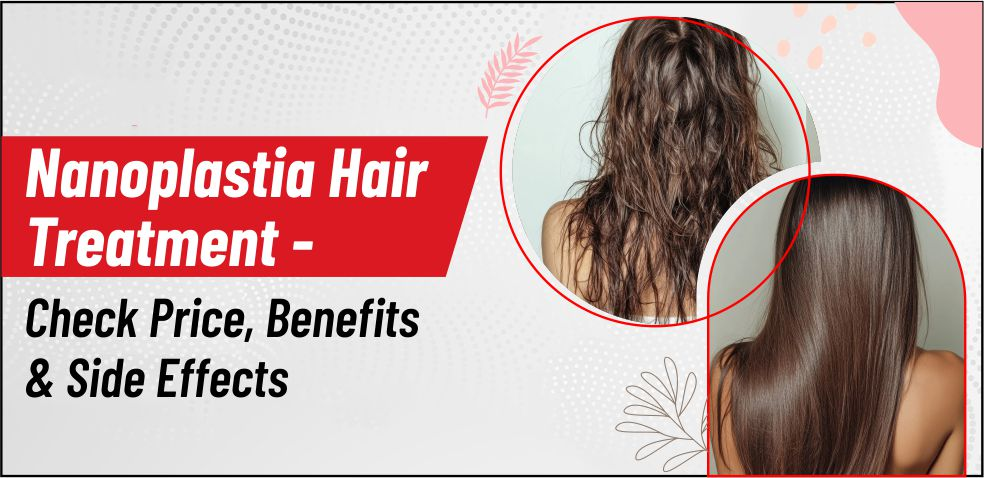
One such treatment stealing the limelight these days is nanoplastia. As a gentler and more advanced alternative to traditional keratin smoothing, nanoplastia is becoming increasingly popular among hair enthusiasts.
Are you considering nanoplastia but are unsure of its safety, benefits, cost, and side effects? Dr Paul’s detailed guide will help you have a deeper understanding of the procedure.
What is Nanoplastia Hair Treatment?
Nanoplastia focuses on deep hair reconstruction and smoothing. It uses nano-sized molecules that penetrate your hair shaft and restore the damaged fibers.
The term “nano” refers to the extremely small particle size of the active ingredients used in the treatment. Due to their size, these particles can enter the inner layers of your hair to restore strength and elasticity.
Unlike traditional straightening or smoothing treatments, nanoplastia does not use heavy chemicals like formaldehyde or formaldehyde releasers. Instead, it focuses on repairing your hair from within. This makes it stronger, smoother, and more manageable.
In simple terms, nanoplastia aims to improve your hair quality. The smoothness follows naturally.
How Does Nanoplastia Treatment Work?
To understand nanoplastia, you need to understand the basic structure of your hair. Each hair strand is made up of an outer layer called the cuticle and an inner core called the cortex. While the cuticle acts as a protective layer, the cortex is responsible for the strength and elasticity of the strand.
Most hair treatments focus on the cuticle. Nanoplastia, however, works deeper, as explained in the following sections.
Step 1: Penetration
The initial stage of the treatment is focused on delivering nano-sized amino acids, proteins, and conditioning agents to your hair strands. These active particles penetrate the cortex of each hair strand to work on its strength and elasticity.
Step 2: Fiber Reconstruction
The active ingredients help rebuild broken protein bonds, replenish moisture, and improve elasticity in the strands. This stage involves an attempt at managing and reversing the hair damage caused by pollution, heat styling, coloring, and chemical processes.
Stage 3: Cuticle Alignment
This step uses heat to smoothly seal the cuticle over the repaired cortex. It helps reduce frizz and imparts a shine to your hair.
Nanoplastia treatment takes a few hours, but it focuses on the deep reconstruction of your hair. Due to this, it often delivers lasting results. Depending on the hair type and maintenance, the results could last for up to 3 to 6 months.
Benefits of Nanoplastia Hair Treatment
Nanoplastia might be the hype these days, but it is for a reason. The treatment offers a range of benefits, from aesthetic value to long-term hair health. The following sections discuss some of the most remarkable benefits of nanoplastia hair treatment.
1. Visible Improvement in Hair Texture
After the treatment, your hair becomes smoother, softer, and more manageable while also appearing natural.
2. Long-Term Hair Repair
Unlike cosmetic treatments, nanoplastia strengthens your hair strands internally. This improves their resilience and elasticity, which lasts for a long time.
3. Reduced Frizz
The final step of nanoplastia focuses on aligning the cuticle over the treated cortex layer. This allows your hair to stay smooth and controlled even in humid weather.
4. Enhanced Shine and Smoothness
With a smooth and nourished cuticle, the light reflects better. This gives your hair a naturally healthier appearance.
5. Less Damage from Daily Styling
With your hair being smoother and more manageable, you do not have to rely on heat styling tools to make your hair look presentable. This allows the hair strands some downtime to heal.
6. Color-Safe Formulation
Nanoplastia does not strip hair color and may even help preserve it.
Potential Side Effects of Nanoplastia
Nanoplastia is generally considered a safe and mild procedure. However, as with any treatment, it carries the risk of some potential side effects.
Mild/Temporary Side Effects
- Mild scalp sensitivity
- Slight dryness if hair was already damaged
- Temporary irritation from heat styling
Rare Side Effects
- Allergic reaction to product ingredients
- Scalp redness or itching
Make sure you do a patch test before the treatment, especially if you have a sensitive scalp.
Nanoplastia Hair Treatment Price in India
The cost for nanoplastia hair treatment in India varies based on several factors. Some of them include:
- The length and thickness of your hair
- Product brand used
- The expertise of the clinic
- City and location
The average price range is as follows:
- Estimated cost for short hair: 3,000 INR to 5,000 INR
- Estimated cost for medium-length hair: 5,000 INR to 8,000 INR
- Estimated cost for long hair: 8,000 INR to 12,000 INR or more
Kindly note that this is simply an estimated average value. The overall cost of the treatment may vary between different clinics and locations.
Who is an Ideal Candidate for Nanoplastia?
Nanoplastia might be the best solution if you are dealing with:
- Frizzy or unmanageable hair
- Dry, rough texture
- Heat or color damage
- Mild to moderate curl loosening needs
- Hair that lacks shine and softness
This treatment is the most suitable for:
- Straight, wavy, and mildly curly hair
- Color-treated hair
- Chemically untreated
- Previously treated hair after assessment
Nanoplastia treatment might not be ideal for you in the following cases:
- Severely damaged or broken hair
- Active scalp infections or wounds
- Recently bleached or chemically relaxed hair
- Pregnant or breastfeeding women must consult with a specialist first
Get Both Aesthetics and Healing with Nanoplastia
Nanoplastia hair treatment is a repair-focused hair care rather than aggressive cosmetic smoothing. It offers a modern solution if you are looking to restore your hair health while also achieving smoother, shinier, more manageable hair.
As with any professional treatment, the success of this procedure depends on the correct diagnosis, the use of quality products, and expert application. It is best to consult with a qualified and experienced specialist to ensure the treatment is tailored to the specific needs of your hair.
Consult with our experts at Dr. Paul’s Advanced Hair and Skin Solutions Clinic to get the best professional care for a nanoplasty treatment.
FAQs
-
How long does nanoplasty hair last?
The effects of nanoplasty typically last between 4 to 6 months. It depends greatly on your hair type, the quality of the products used, and your post-treatment hair care routine. In some cases, this treatment may last for up to 8 months.
-
Which is better, Nanoplastia or keratin?
Nanoplastia is generally considered a better alternative than keratin hair treatment. While keratin is classic and highly effective in straightening thick hair, it is heavily chemical-based. Nanoplastia, on the other hand, is formaldehyde-free, deeply nourishing, versatile, and longer lasting.
-
What to avoid after nanoplastia?
After nanoplastia treatment, it is recommended to avoid heat styling. Use mild shampoo instead of the heavily chemical-based ones. It is best to refrain from very tight hairstyles to prevent putting any strain on your hair.