Hair loss is not only confusing and emotionally stressful, but it is also expensive to solve, particularly when you have no idea which treatments are effective and which ones may fail. Platelet-rich plasma (PRP) therapy has emerged as an alternative hair treatment, yet outcomes vary widely depending on the recipient and application. Clinics that focus on proper diagnosis and plan treatment based on the patient’s particular needs are vital for results.
Dr. Paul’s Advanced Hair & Skin Solutions has characterized taking PRP hair treatment as a medical test, which educates the patient and makes evidence-based decisions instead of setting a one-size-fits-all option.
Understanding the mechanism of PRP, as well as the people it helps and those it does not help, can guide your decision on whether it is worth spending on.
The PRP procedure is based on the growth factors contained in your blood that are being used to activate already existing hair follicles and enhance the health of your scalp.
Platelet-rich plasma is made using your blood. The platelets and the other components of blood are separated using a small quantity of blood, which is collected and put through a centrifuge. Platelets contain high levels of growth factors, which aid in the preparation of tissues, the regeneration of cells, and healing.
In PRP therapy for hair loss, this concentrated plasma is administered to stimulate weakened hair follicles and enhance the environment of the scalp. The centrifugation method, platelet concentration, and handling are some of the factors that influence the effectiveness of the end product.
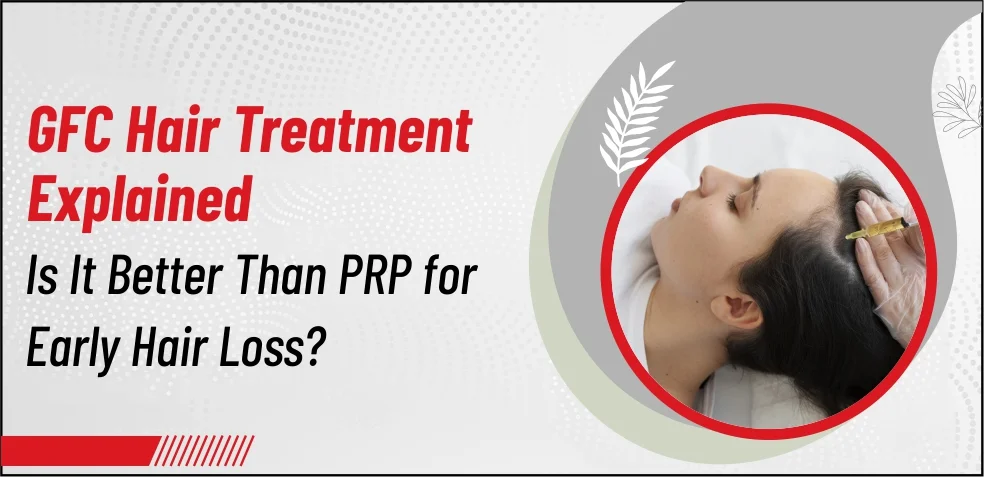
PRP is ready and then injected into specific parts of the scalp using fine needles. Such injections are injected into depths containing hair follicles. The process is rarely invasive, with most cases taking an hour. Other patients have mild discomfort, redness, or swelling, which generally disappear in the span of a day or two.
The proper method is important. When placed incorrectly or having uneven distribution, it becomes ineffective. Clinics that act in an anatomically precise and medically driven manner enhance the chances of PRP landing in areas of active follicles that can react to the treatment.
PRP does not affect the formation of new hair follicles. Rather, it acts by activating the already existing follicles, which have become weak or dormant. PRP growth factors may also enhance the supply of blood to follicles, prolong the hair-growing phase, and thicken the hair shaft. Underperforming but alive follicles are those that have the highest chances of responding.
When the follicles are destroyed or substituted by scar tissue, PRP would be unable to repair the damage. This biological constraint explains why different people have significant differences in their results.
PRP results are gradual. The decreased level of hair loss can be observed in the first two to three months. The results of hair texture and hair thickness tend to improve after three to six months. Noticeable density changes are not immediately noticed but may be achieved only after numerous sessions. PRP is not a quick cure, and patients who do not see results soon are usually left with discontentment, even when the therapy is fine.
Some hair loss patterns are more responsive, such as when the follicles are functional and the damage is not progressive.
PRP is effective in people who are still in the early phases of pattern hair loss. The follicles are active but are feeble. At this point, follicles may react to stimulate growth factors and restore function. Male and female individuals suffering from early thinning usually experience a reduction in shedding and increased thickness in their hair.
Stress, loss of hair, hormonal imbalances, and deficiencies in nutrition are good examples that respond well to PRP when its underlying triggers are taken care of. PRP helps in recovering the follicles through improving the scalp circulation and the repair of cells.
Dr. Paul’s Advanced Hair & Skin Solutions focuses on finding the causative factors, like iron deficiency, thyroid disturbance, or long-term stress, and initiating PRP to enhance the treatment outcome.
PRP is the right solution for individuals who prefer a non-surgical procedure, and they are not prepared to undergo hair transplant surgery. It is able to delay the hair loss and increase the quality of the hair without cuts or extended recovery time. PRP may be an effective component of a larger hair management approach for patients with realistic expectations.
PRP is associated with definite biological boundaries and cannot have an effect in those instances when the follicles cannot regenerate anymore.
PRP fails in the cases of hair follicles that are non-viable. In severe baldness, the follicles can either be dormant or replaced by scars. With this, PRP will have nothing to trigger, and treatment will not be completed, no matter the number of sessions.
The PRP is not always a good response to genetic hair loss that has a long history of development. Although PRP can be used to enhance the hair of the surrounding areas, severe follicular loss cannot be reversed. These stages typically involve surgical or combined treatment for the patients.
There are some medical disorders that may impair the efficacy of PRP. Follicle responsiveness decreases in cases of autoimmune disorders, uncontrolled diabetes, blood disorders, and chronic inflammatory scalp conditions.
Dr. Paul’s Advanced Hair & Skin Solutions has medical reasons, which could interfere with PRP outcome, so that patients do not receive useless care.
PRP can only be decided upon when the type of hair loss, the viability of the follicles, and whether other forms of treatment are also more suitable are considered.
The key intervention before investing in PRP is the right diagnosis. The set of hair loss has to be approached differently. Using RP alone in the treatment of scarring alopecia, advanced genetic loss, or untreated medical conditions will cause failure. An elaborate analysis shows whether PRP is suitable or not.
It is important to determine follicle status, i.e., whether they are active. This includes studying scalp health, inflammation, miniaturization patterns, and hair density. The state of a healthy scalp enhances PRP response, whereas chronic inflammation or fibrosis reduces the chances of success. Scalp evaluation clinics are clinics that avoid wasting patients’ money.
PRP does not necessarily hold its own. Other patients would need medications, lifestyle changes, or surgery. When PRP is to be used along with other treatments or not, Dr. Paul is very clear and lets the patient make the final financial and medical choices and does not make false promises and premises.
PRP therapy in treating hair loss may work, depending on the patient. Being aware of these differences before paying for treatment will help avoid disappointment and prevent spending extra money. The selection of a clinic with the focus on diagnosis, transparency, and custom planning is a significant factor.
Dr. Paul’s Advanced Hair & Skin Solutions offers PRP therapy provided by medical consideration and gives the patients the chance to make their own informed decision that PRP is really a worthwhile treatment.
DR PAULS MULTISPECIALITY CLINIC PRIVATE LIMITED provides a unique and different approach.
Copyright © 2025. All Rights Reserved.